Enhancing integration of AI for smarter Onboarding Experiences
Overwhelmed by AI in 2026? Learn to balance automated digital adoption with human mentorship. Transform onboarding from generic to genetic with our hybrid guide.
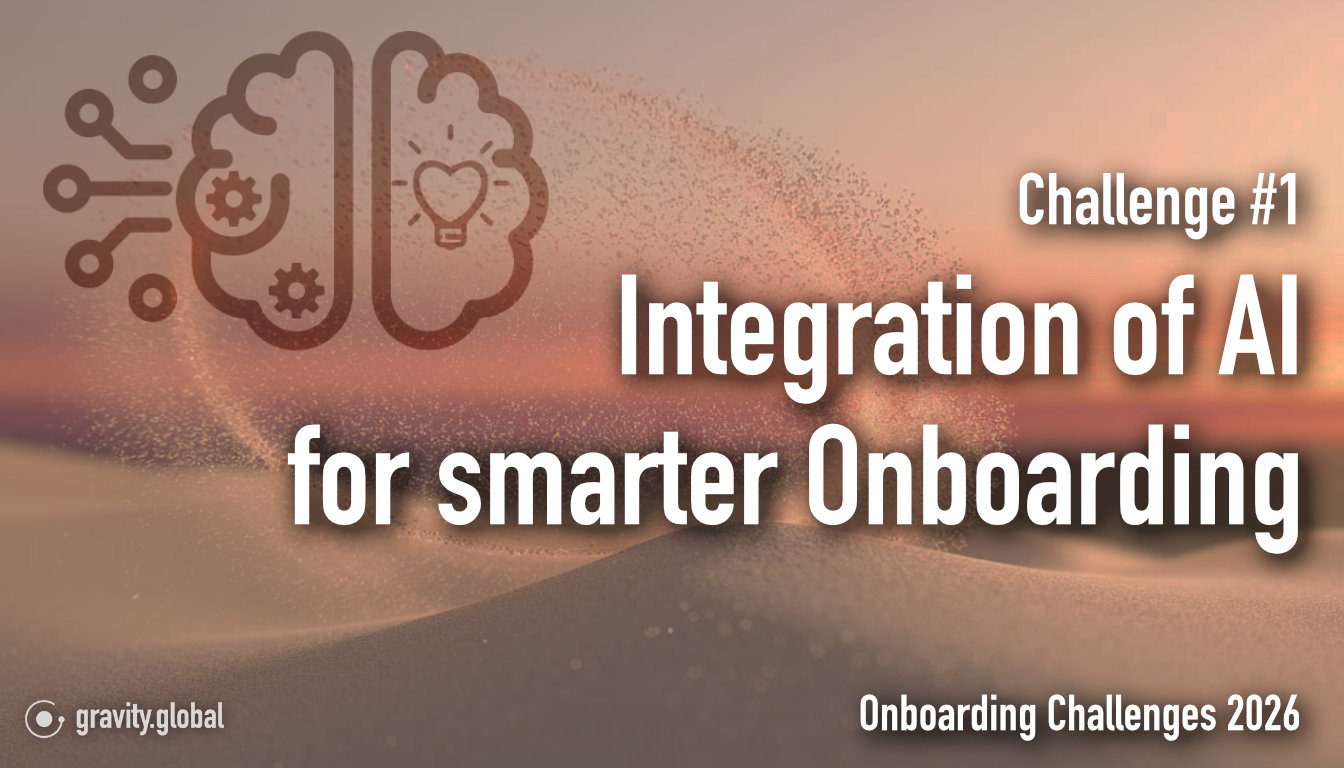
Illustration: Composition by Gravity Global AG
In our 2026 overview blog post, we diagnosed a growing symptom in the modern enterprise: Digital Indigestion. This phenomenon occurs when the pace and volume of digital initiatives exceed an organization’s ability to manage them effectively, creating inefficiencies, escalating costs, and lost opportunities.
By 2026, the average new hire is expected to master over 15 different SaaS tools within their first month. While companies have responded by deploying aggressive AI training bots and automated workflows, the result is often an onboarding experience that feels efficient on paper but isolating in practice. New hires are drowning in automated notifications, leaving them technically onboarded but culturally adrift.
The solution isn't to reject the tools of the future, but to humanize them. To solve the challenge of "Enhancing integration of AI for smarter Onboarding Experiences," leaders must pivot to a "Human-Centric Digital Adoption Strategy".
Here is the blueprint for striking that delicate balance.
1. The Death of "Just-in-Case" Training
The old model of onboarding relied heavily on "Just-in-Case" training—a strategy that involves forcing employees to watch hours of video content or read extensive documentation about software features they might use someday, often long before they actually need them. This approach, centered on memorization rather than application, is inefficient and frankly obsolete. In the hyper-digital, fast-paced environment of 2026, where digital transformation efforts mean software is constantly evolving and the average new hire interacts with a vast, specialized tech stack, attempting to front-load all this information is a surefire recipe for cognitive overload and early burnout. This outdated method mistakenly treats the human brain as a storage drive instead of an active processor, resulting in a low retention rate and a high degree of frustration when the new hire finally needs to perform a complex task weeks later.
The Solution: meaningful Digital adoption via Just-in-time learning. We must move the learning experience "inside" the workflow. Instead of separating the "learning" from the "doing," use a Digital adoption platform to overlay guidance directly onto the application.
- Context over Content: Don’t send a PDF manual on "How to Create an Invoice." Instead, use In-app guidance to highlight the specific buttons and fields required at the exact moment the employee opens the invoicing software.
- Preventing Friction: By utilizing Interactive walkthroughs, you reduce the anxiety of making mistakes. The AI acts as invisible guardrails, ensuring data accuracy and boosting initial Employee productivity without the employee feeling micromanaged.2. From Generic to Genetic: Hyper-Personalized Pathways
2. From Generic to Genetic: Hyper-Personalized Pathways
One of the main complaints regarding AI tools is that they feel generic. A senior engineer joining a new team and a junior sales representative starting their first job should not be receiving the exact same onboarding "welcome sequence," yet, frustratingly, they often do. The lack of nuance in deployment undermines the very purpose of personalized onboarding, turning sophisticated AI into nothing more than a glorified, standardized checklist that fails to account for existing knowledge or differing departmental needs.
The Solution: Leverage Adaptive learning to respect the individual. AI should be used to assess the user's background and behavior to create a bespoke experience. This shifts the focus from delivering uniform content to curating a uniquely relevant journey for every employee, making them feel like a valued individual rather than just a number being processed.
- Proficiency Recognition: If a new hire demonstrates high Digital proficiency or creates a complex report correctly on the first try, the system should recognize this Employee performance and automatically suppress beginner-level tutorials.
- Accelerated Time-to-Value: By identifying and skipping what the employee already knows and focusing only on filling critical gaps in their knowledge, you significantly improve their Time-to-value, the speed at which they become a productive contributor. The employee feels seen and understood, confident in a system that is tailoring itself to their existing skills, rather than being patronized by a rigid, one-size-fits-all approach.
3. The "80/20 Rule" of Human Connection
The most critical part of the 2026 challenge is the "Human Element." If AI handles the logistics, humans must handle the logic and the love.
The Solution: Automate the Admin to Liberate the Mentor. We propose an 80/20 split. AI should handle 80% of the onboarding tasks—specifically the repetitive, administrative ones—so that the remaining 20% of human interaction is high-impact.
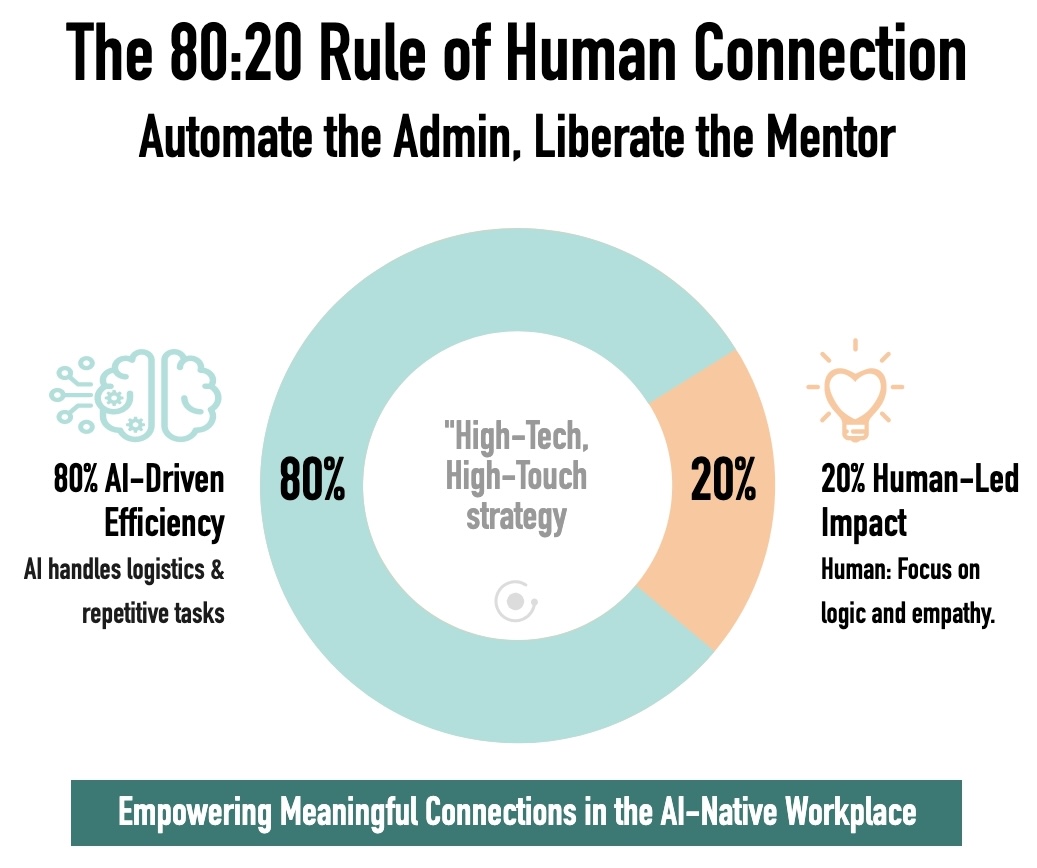
- Automate (The 80% Efficiency Gain): AI excels at monotonous, yet necessary, work. This includes fully digitizing and automating the handling of enrollment forms, managing security compliance checkboxes, orchestrating initial software setups, and delivering essential training on Standard operating procedures. Crucially, even the collection of employee feedback via automated "pulse check" surveys should be AI-driven, ensuring timely deployment, anonymity for candid responses, and aggregation of data for HR analysis. This shift minimizes error and maximizes the speed at which the employee gets to their actual job.
- Humanize (The 20% Impact Focus): With the administrative burden lifted, the manager's role is transformed from a technical support agent into a cultural guide and mentor. Because the manager no longer has to spend their precious first hour explaining archaic processes like how to log into the email server or find the VPN settings (since Smart tips and Callouts handled that already), they can dedicate that time to high-value, human-centered activities. This might include discussing team culture, mapping out career goals, fostering meaningful relationships, and driving true Employee engagement activities that cement commitment and ensure the new hire feels welcomed, valued, and strategically aligned.
4. Onboarding is a Circle, not a Line
In the contemporary enterprise landscape of 2026, the notion of onboarding as a linear, finite process is a dangerous fallacy. The pace of digital change has accelerated to the point where software updates and platform changes happen weekly, if not daily. Consequently, the traditional concept that training "ends" after 90 days or the initial probation period is entirely obsolete. Relying on this outdated model inevitably leads to rapid skill decay, where employees who were initially proficient become frustrated and unproductive when faced with a constantly shifting Digital workplace. To maintain high Employee proficiency and a culture of agility, the learning experience must be redefined as an ongoing, iterative cycle.
The Solution: Continuous onboarding powered by Microlearning.
- The Update Loop: When a tool changes for a user, the AI, or GRAVITY should push a 30-second "What's New" card to the user. This creates a culture of Continuous learning where upskilling is a bite-sized daily habit, not a disruptive annual seminar.
- Sustaining Satisfaction: Employees who feel competent with their tools have higher Employee satisfaction. By keeping them constantly updated without overwhelming them, you reduce the "technostress" that leads to churn.

Embrace the digital adoption platform of tomorrow - GRAVITY
The Digital Adoption Updates You Can't Miss - Subscribe Now!
Join Our Monthly Author Call – Stay Ahead of the Curve with the Latest Trends!
Conclusion: The Symbiotic Workplace
The challenge of 2026 is not "AI vs. Humans." It is about using AI to reclaim our humanity at work.
As we have explored, AI is essential for automating administrative tasks and delivering personalized, contextual guidance. Humans, conversely, are irreplaceable when it comes to mentorship, cultural transmission, and fostering the sense of belonging that drives long-term Employee engagement.
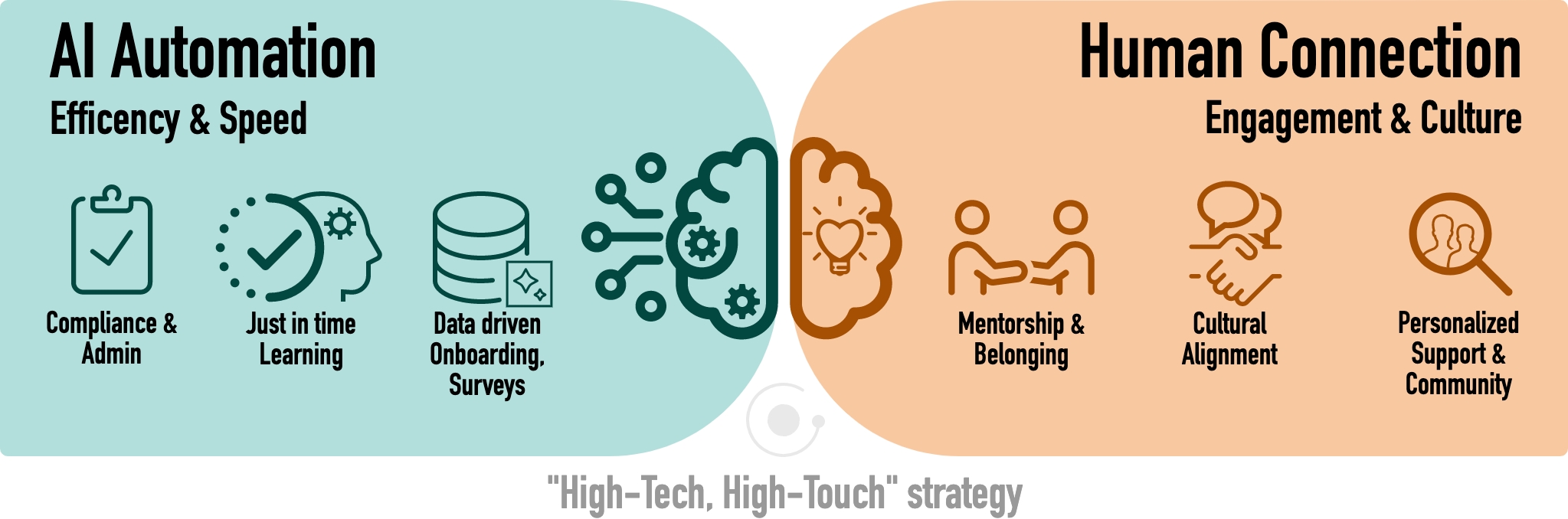
By incorporating this "High-Tech, High-Touch" approach, organizations embrace the future of Continuous onboarding—a journey that is dynamic, adaptive, and always centered on the individual. This is the 80/20 Rule in action: letting AI handle 80% of the repetitive tasks so that human leaders can focus their precious 20% on meaningful, impact-driven connection and growth.
By deploying tools like GRAVITY to shoulder the heavy cognitive load of software training and administrative compliance, organizations can finally deliver on the promise of onboarding: welcoming a new human being into a community, not just adding a user to a database.
References & Further Reading
- Decode the Jargon: Unsure about the difference between Digital Adoption and Change Management? Visit the GRAVITY Glossary.
- The Context: To understand how we arrived at this critical juncture, read our retrospective analysis: Onboarding challenges in 2026.

Christoph Müller
For years I used corporate Intranets in the workplace, experiencing firsthand that traditional learning formats for IT rollouts and employee onboarding do not work. I developed GRAVITY software to tackle this challenge. Employees are happier because learning is simple and effective; businesses are happier because their IT rollouts are successful and cost a lot less than before.
Latest articles
Browse all posts