Onboarding challenges in 2026: Preparing for the next stage of development
Discover the top onboarding challenges of 2026 and learn how to leverage AI, hyper-personalization, DEI, and continuous learning for workplace success.
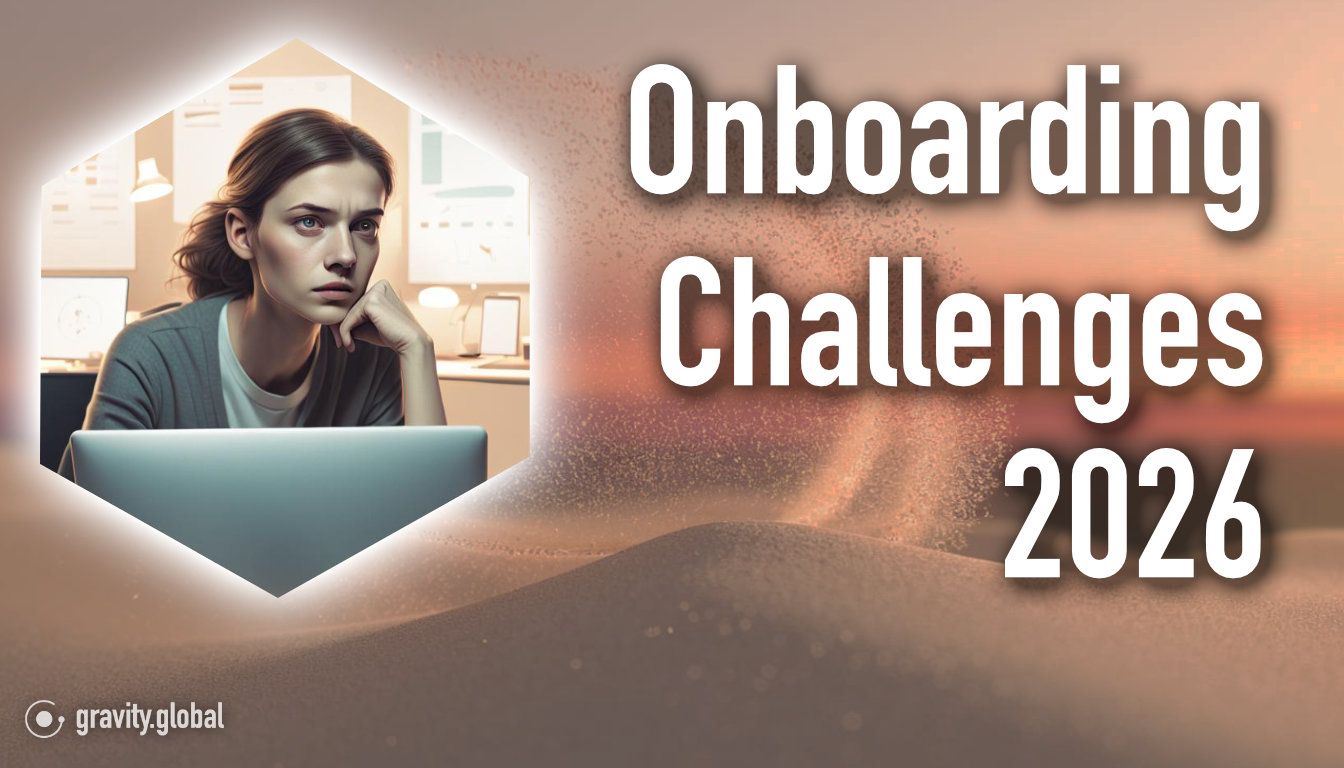
The workplace continues to evolve rapidly. In 2025, organizations confronted significant challenges; from adapting to AI integration, addressing minimal engagement, tracking onboarding effectiveness through metrics, and eliminating one-size-fits-all approaches.
As we move into 2026, these challenges have evolved further, pushing companies to rethink the onboarding process to meet emerging workforce needs, technological advances, and cultural shifts.
Key shifts since 2025
- AI-enabled personalization uses assistants and Learning Experience Platforms (LXP) to tailor content and pacing according to role, prior experience, and learning signals.
- Continuous Onboarding: Onboarding continues throughout the first year and emphasizes micro-credentials and competency checkpoints rather than a fixed checklist.
- Skills-focused internal mobility connects onboarding directly to career pathways and talent marketplaces, accelerating time-to-productivity and enhancing retention.
- Inclusion & wellbeing: Onboarding includes community access, psychological safety check-ins, and workload calibration to reduce early churn.
Challenge 1: Enhancing integration of AI for smarter Onboarding Experiences
By 2026, workplace AI tools have become even more ingrained in the onboarding process. However, many companies are struggling to effectively integrate these tools without overwhelming new hires or neglecting the human element of onboarding.
Challenge: Striking a balance between automated AI solutions and personalization has become crucial. AI-driven onboarding tools must focus not only on efficiency but also on fostering engagement and personal connections. The challenge lies in leveraging AI to automate repetitive tasks like onboarding surveys while ensuring human involvement for cultural alignment and mentorship.
Solution: Ready to dive deeper? Download the full article here.
Challenge 2: Continuous Learning as an Ongoing Strategy
The need for continuous learning after onboarding, first emphasized in 2025, will become even more critical in 2026. Rapid technological changes require employees to adopt an ongoing learning mindset.
Challenge: Sustain employee engagement beyond the onboarding phase while fostering continuous growth by keeping them updated on advancements in their roles and industry trends. Despite its importance, many organizations still fail to invest adequately in structured continuous improvement programs.
Solution: Ready to dive deeper? Download the full article here.
Challenge 3: Data-Driven Onboarding with Advanced Metrics
In 2026, the ability to measure onboarding success relies more heavily on leveraging analytics tools. Yet, nearly half of organizations still lag in effective usage of onboarding metrics, which leaves room for inefficiencies and missed opportunities.
Challenge: Limited adoption of advanced HR analytics tools restricts organizations from understanding the true impact of onboarding measures.
Solution: Check back later—the article is coming soon!
Challenge 4: A Shift from “Personalization” to “Hyper-Personalization”
2026 will see the personalization trend evolve into "hyper-personalization", where onboarding is holistically tailored to individual preferences and scenarios. Diversity and dispersal in remote-first workplaces necessitate onboarding paths designed to meet unique cultural, geographic, and workflow demands.
Challenge: Achieving scalable hyper-personalization in large organizations while balancing the efficiency of automation with the importance of safeguarding privacy concerns.
Solution: Hang tight—the article will be available shortly!
Challenge 5: Prioritizing DEI in Onboarding
By 2026, diversity, equity, and inclusion (DEI) are no longer add-ons to onboarding; they’ve become pivotal to instilling company values. Employers will face pressure to ensure onboarding fully integrates DEI consciousness for diverse teams.
Challenge: Some onboarding programs still fail to address inclusivity beyond surface-level practices, which risks alienating employees and missing opportunities for diverse thought leadership.
Solution: Don't go far—the article will be ready soon!

Embrace the digital adoption platform of tomorrow - GRAVITY
The Digital Adoption Updates You Can't Miss - Subscribe Now!
Join Our Monthly Author Call – Stay Ahead of the Curve with the Latest Trends!
As 2026 unfolds, onboarding continues to evolve at a faster pace, fueled by advancements in AI, technology, and heightened employee expectations. Organizations that embrace continuous learning, invest deeply in metrics, and adopt hyper-personalized approaches will stand out in creating engaged, productive workplaces.
The future presents both the challenge and the opportunity to onboard employees in innovative ways tailored for success.

Christoph Müller
For years I used corporate Intranets in the workplace, experiencing firsthand that traditional learning formats for IT rollouts and employee onboarding do not work. I developed GRAVITY software to tackle this challenge. Employees are happier because learning is simple and effective; businesses are happier because their IT rollouts are successful and cost a lot less than before.