AI vegetarian or convinced hater? A Guide for Skeptics
AI hype or "slop" weariness? From AI vegetarians to religious skeptics, learn why more people are consciously avoiding generative tools.

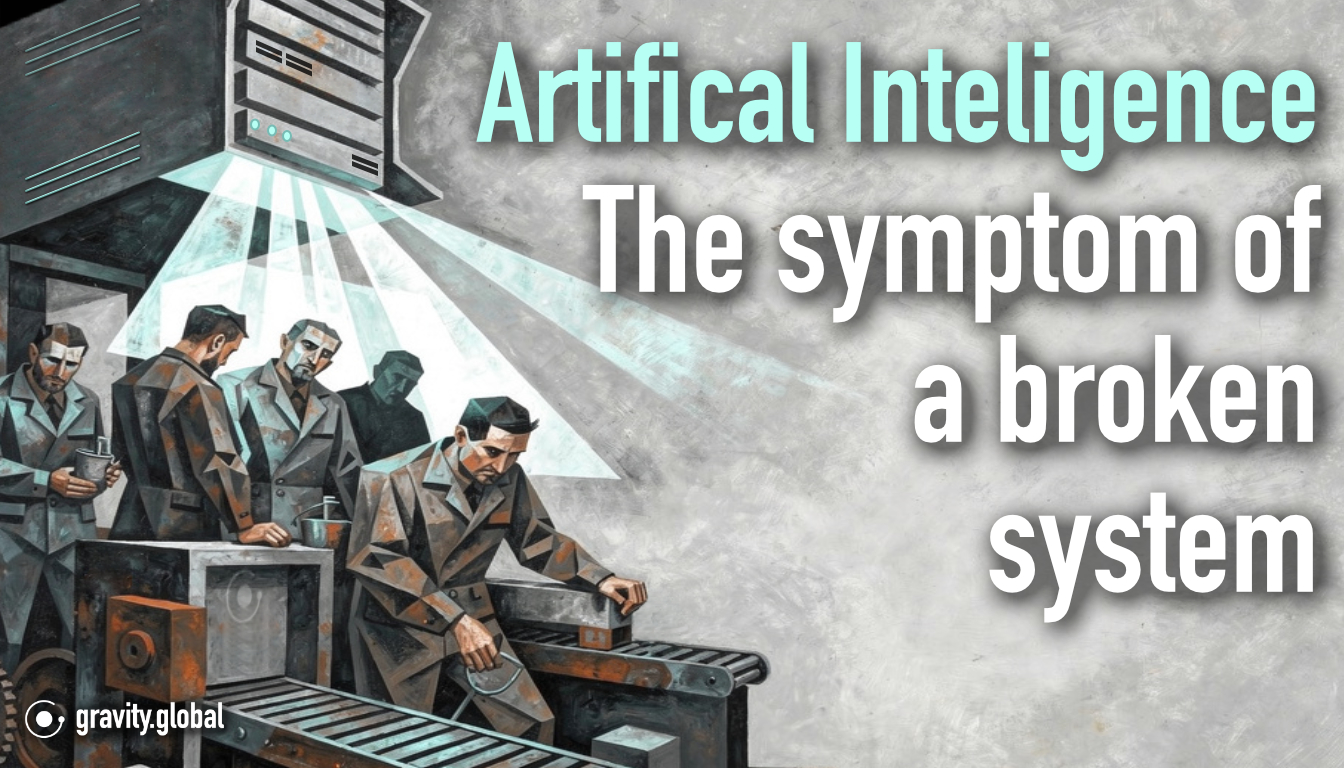
Illustration: It was the author, not Stable Diffusion, who was responsible for creating it.
In a world in which we encounter "slop", that inferior, AI-generated content garbage, on every corner, it is becoming increasingly difficult to put one's own rejection into words. Whether in the browser, in the e-mail inbox or even on physical decorative items: generative AI is everywhere. But while Silicon Valley is celebrating the "digital frenzy," an eloquent resistance is forming.
A recent article by Liam Proven on The Register dispels the prejudice that AI skeptics are simply hostile to technology. Rather, he shows a spectrum of attitudes, from the moderate "AI vegetarian" to the proud "AI hater".
The generative AI vegetarian: "I prefer to think for myself"
Software developer Sean Boots coined the term "generative AI vegetarianism". He represents a moderate but clear position. He does not want to proselytize, but draws a line for himself:
"I want to write my own emails. I want to write my own (mediocre) software code. I want to learn, think, and brood with other people, not with a text prediction system that was created by consuming the entire Internet."
Sean Boots
Boots emphasizes that he is not an "AI vegan", in his job he certainly helps to make government data more accessible with the help of AI. But he gratefully renounces his own creative and cognitive use.
The fear of mental atrophy
Jenny Zhang goes one step further in her text "Choosing Friction". She criticizes the central promise of AI – the elimination of any effort:
"The promise of AI is that it removes friction... In their ideal world, you don't have to think about anything anymore, because an AI does the thinking for you. [...] I like thinking and think people should do more of it. The less we do it, the more our thinking muscles atrophy."
Jenny Zhang
For Zhang, this development is particularly dangerous because it makes people easier to control; a dream for authoritarians, a nightmare for free society.
The proud AI hater
If "vegetarianism" sounds too polite to you, you may find yourself in the position of Anthony Moser . He breaks with society's expectation that AI criticism should always be accompanied by a reassuring disclaimer ("Of course the technology itself is great, but...").
"I'm a hater, which is a form of integrity. It means that I'm willing to contradict anyone, even if it's rude. "But I only use it for...", "Actually, if you only...", "The new models..." Stop. You are embarrassing yourself. I'm ashamed of you."
Anthony Moser
The "religious exception" as a last resort
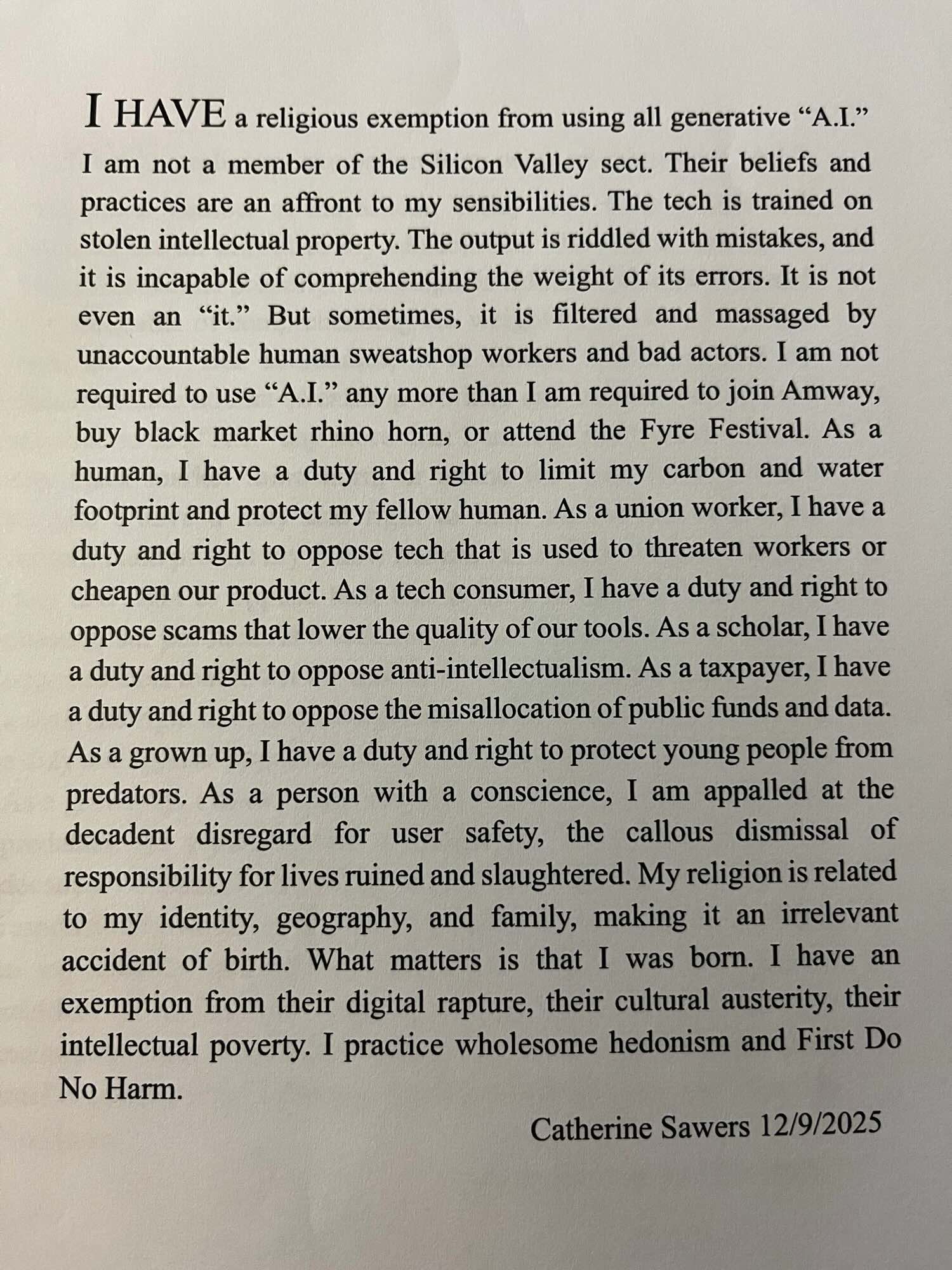
The manifesto by Catherine Sawers is particularly impressive. She suggests treating the rejection of AI as a religious conviction in order to resist massive pressure from the tech industry. Their reasoning is a sweeping blow against the ethical deficiencies of the industry:
"I have a religious exemption from the use of all generative 'AI'. I am not a member of the Silicon Valley sect. Their beliefs and practices are an affront to my sensibilities. The technique was trained with stolen intellectual property. [...] I'm not obligated to use 'AI', any more than I'm obligated to join Amway, buy rhino horns on the black market, or attend the Fyre Festival."
Catherine Sawers
Sawers sees it as her duty as a human being, scientist and taxpayer to stand up against the "digital Rapture" and "intellectual poverty".

Embrace the digital adoption platform of tomorrow - GRAVITY
The Digital Adoption Updates You Can't Miss - Subscribe Now!
Join Our Monthly Author Call – Stay Ahead of the Curve with the Latest Trends!
Conclusion
Whether one moderately dispenses with AI-generated texts or rejects the entire system as an ethical oath of revelation: The Register article makes it clear that skepticism is not a sign of backwardness. It is an act of self-assertion in the face of a technology that often promises more than it can deliver, and that threatens to take away the most important thing from us: the friction from which we grow.
Source: "Struggling to put your AI aversion into words? Here's a handy glossary" by Liam Proven, published on March 19, 2026 on The Register.

Christoph Müller
For years I used corporate Intranets in the workplace, experiencing firsthand that traditional learning formats for IT rollouts and employee onboarding do not work. I developed GRAVITY software to tackle this challenge. Employees are happier because learning is simple and effective; businesses are happier because their IT rollouts are successful and cost a lot less than before.
Latest articles
Browse all posts