When AI Gets… Creative (and Not in a Good Way)
When AI flags harmless content as explicit: a witty look at flawed image recognition, false positives, and the limits of automated moderation.
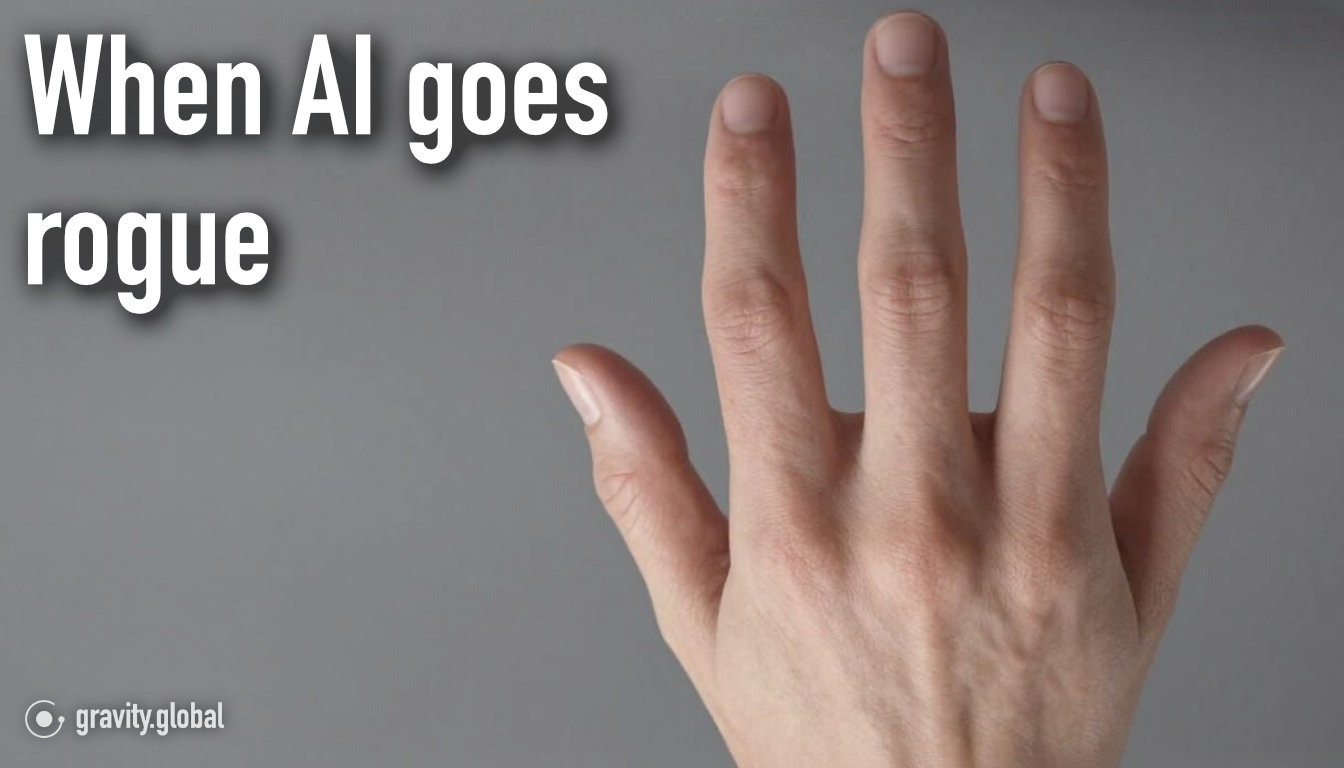
It began, as most days do, with unhealthy amounts of coffee, calendars, and quiet optimism. Our morning meeting hummed along nicely, that familiar rhythm of “what’s on today,” light banter, and the subtle illusion that we are, in fact, in control of the day ahead. Tasks were assigned, priorities aligned, and somewhere between “quick wins” and “strategic initiatives” I picked up what seemed like a perfectly harmless to-do:
Promote Chris’ newest blog: “AI vegetarian or convinced hater? A Guide for Skeptics.”
A thoughtful piece. A relevant topic. A sprinkle of healthy skepticism in an otherwise AI-infused world. All very respectable. Very… non-scandalous. Very demure.
Off I went. LinkedIn? Posted. Google Business profile? Posted.
Tick, tick. Efficient. Productive. A model citizen of digital marketing.
Naturally, I moved on to other world-saving activities. And then, Teams notification.
Chris: “WHAT have you done?”
Ramona: “Umm, plenty, but you will need to be more specific”
Chris: “Well, apparently you are sharing sexually explicit content that includes genital nudity or depictions or descriptions of sexual acts on Google.”
Ramona: “👀 I am WHAT??? HOW???”
Chris: “You tell me”
.jpg)
Ramona: “…”
Ramona: “... right… 🤔”
Now.
Let’s pause here for a moment, because unless I’ve unknowingly developed a talent for subliminal scandal (a skill I’m fairly certain is not listed on my CV), something in this chain of events went... spectacularly sideways.

Embrace the digital adoption platform of tomorrow - GRAVITY
The Digital Adoption Updates You Can't Miss - Subscribe Now!
Join Our Monthly Author Call – Stay Ahead of the Curve with the Latest Trends!
The Curious Case of the Overenthusiastic Algorithm
Somewhere deep within the polished, data-hungry machinery of Google Image Recognition, a decision was made. A decision that looked at our entirely innocent blog promotion and concluded: “Yes. This is clearly inappropriate. Possibly very inappropriate.”

Now, we do have our suspicions and theories: perhaps a misinterpreted visual? A pattern that resembled something it shouldn’t? A pixel too bold? A shape too suggestive? Or simply a model having… a bit of a day?
But the truth is, we don’t know. And that’s precisely the point.
A Short (and Slightly Raised Eyebrow) Critique
There’s something faintly absurd and slightly concerning about the opacity of AI moderation systems.
We are told that these tools are highly advanced, that they understand context, and that they can distinguish nuance, intent, and meaning. And here we are scratching our heads (giggling a bit too much) and yet:
- A professional blog post becomes “explicit content.”
- A business update triggers a content violation.
- And the humans involved are left staring at each other in shared confusion.
So, what exactly is happening under the hood? Are these systems truly understanding content, or are they simply pattern-matching at scale, occasionally tripping over their own confidence? And more importantly:
- Should we reconsider our careers?
- Where is the line between caution and overreach?
- How do we challenge or even interpret decisions made by systems that don’t explain themselves?
- What does “accuracy” mean when false positives can quietly distort visibility, reputation, or trust?
- And perhaps most critically, who is accountable when the algorithm gets it wrong?
Because while this particular incident leans more toward the comical than catastrophic, the underlying issue is not trivial.
Conclusion: When the Machine Raises an Eyebrow
In the end, no scandal was uncovered, and no hidden subtext was revealed, other than the fact that we are too immature for our age, but that is another topic. Just a slightly bewildered team, a flagged post, too many giggles (at least that’s a plus), and a reminder that even the most sophisticated AI can, occasionally, see things that simply aren’t there.
And perhaps that’s the real takeaway: AI is powerful, impressive, and occasionally brilliant. But it is not infallible. Not contextual in the way humans are. And certainly not immune to… creative misinterpretation.
So, until further notice, we’ll continue to write blogs, post updates, and cautiously trust the machines with one small adjustment: a healthy dose of skepticism.
And maybe, just maybe… a second look at our images.

Ramona Lescesen
After completing my Masters in the UK, I had the opportunity to start my career in London's vibrant start-up scene. In my career, I have had the privilege of seeing how a start-up can grow into a global market leader. This has taught me the importance of good communication and how best to manage a company's most important relationships - its customers.
Latest articles
Browse all posts