Remote Work Needs More Than Zoom: How GRAVITY Connects Hybrid Teams Through Digital Adoption
Use GRAVITY’s in-app guidance, announcements, and analytics to connect remote teams, improve onboarding, and strengthen hybrid work culture.
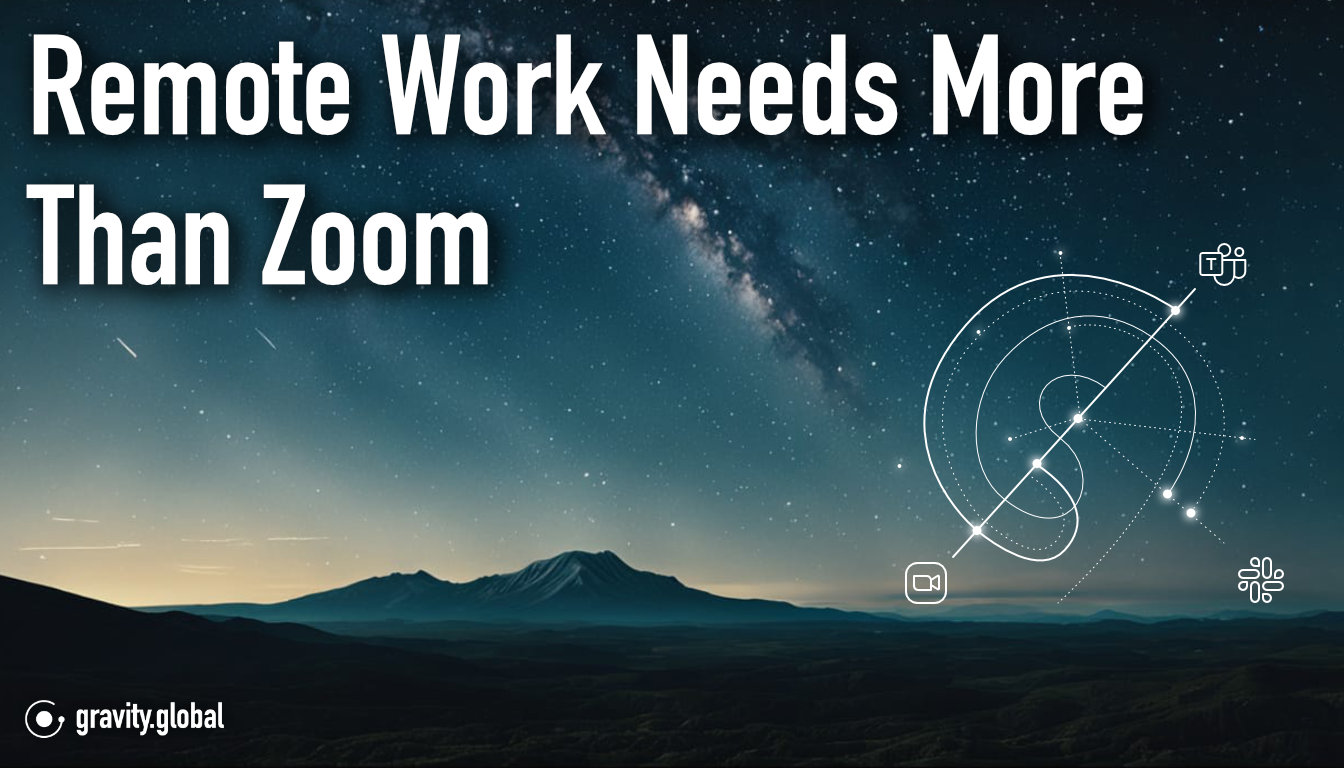
Illustration: Composition by Gravity Global AG
Remote and hybrid work delivered flexibility, focus, and freedom across locations and schedules. But as the office became less central, the digital workplace became the place where culture, onboarding, communication, training, and collaboration happen. That means employee experience now depends on how easily people can navigate systems, understand processes, and feel connected wherever they work.
As we explored in our “How-To” Guide for Driving Digital Transformation Through Employee Adoption, technology only creates value when employees actually adopt it. In remote and hybrid setups, this becomes even more critical, because there is no desk neighbour to ask, no quick hallway clarification, and no shared office rhythm to fill the gaps.
This is where GRAVITY, the digital adoption platform (DAP), becomes the connective tissue of the modern workplace.
The Virtual Watercooler: Culture Needs to Live Where Work Happens
In traditional offices, culture formed in small moments: a coffee-machine comment, a quick reminder, or a casual “did you see this?” In remote and hybrid work, those moments need to happen digitally and intentionally.
GRAVITY in-app announcements help by placing targeted Callouts and Smart-Tipsdirectly inside daily applications, turning updates, reminders, policies, and welcome messages into timely experiences instead of emails lost in an inbox.
From Noise to Relevance
Internal communication often fails because there is too much information in too many places. Remote employees move between email, Teams, Slack, intranets, HR systems, CRM platforms, and project tools, where important messages compete with constant noise. GRAVITY makes communication contextual by bringing relevant guidance into the right application, at the right time, for the right audience.
This reflects a core principle from Crafting Your Digital Adoption Strategy: A Guide for Success: successful adoption requires a user-centric approach. It is not enough to publish information. Organizations must make it easy for employees to receive, understand, and act on it. In a hybrid culture, relevance is connection. When employees receive updates that relate directly to their role, system, or task, communication feels less like interruption and more like support.
Asynchronous Onboarding: New Hires Should Not Need a Calendar Full of Zoom Calls
Remote onboarding often starts with good intentions and too many meetings. New hires receive welcome decks, HR checklists, system introductions, team calls, process explanations, and recordings they are expected to watch “when they have time.” The result can quickly feel overwhelming, especially when information arrives before employees have the context to use it.
As described in From Chaos to Clarity: Digital Adoption That Works, the real challenge is not access to tools, but clarity while using them. GRAVITY makes asynchronous onboarding practical by embedding learning directly into the workflow: walkthroughs introduce key processes, Callouts explain important fields, and Smart-Tipsclarify common mistakes exactly when they appear.
This does not remove human connection; it protects it. When basic system orientation happens inside the application, live conversations can focus on culture, relationships, feedback, and deeper questions. Zoom calls become more meaningful because they are no longer overloaded with instructions a digital adoption platform can deliver better.
The Employee Life Cycle Does Not Pause After Onboarding
Remote and hybrid support cannot stop after the first week. Employees change roles, join new projects, adopt new tools, and adjust to evolving processes throughout the employee life cycle. Even experienced employees can become beginners again when systems change.
That is why digital adoption must be continuous. Traditional training assumes knowledge is delivered once and remembered, but distributed teams need support that remains available when informal learning is less visible.
GRAVITY keeps guidance inside the flow of work: accessible, contextual, and role-specific. Whether someone is completing a task for the first time or adapting to a process update months later, support stays consistent, no matter where they work.
How In-App Guidance Builds Belonging
Belonging often begins with confidence: knowing what to do, where to find information, and how to complete work without constantly asking for help. GRAVITY supports this by bringing guidance directly into the application, tailored to each user’s role, language, and context. In-app guidance, interactive walkthroughs, audience targeting, and analytics reduce friction, help employees work independently, and allow organizations to spot struggles before they turn into frustration or disengagement.
As highlighted in How to Drive Employee Software Adoption: A Guide to Digital Adoption Platforms, adoption is not only about software utilization. It is about empowering employees and maximizing the value of business technology investments.
Analytics: Understanding Remote Friction Before It Becomes Disengagement
In an office, confusion is often visible through repeated questions, workarounds, or uncertainty after training. In remote and hybrid teams, those signals are easier to miss. GRAVITY Analytics helps close this gap by showing where users drop off, which processes create friction, and where support is needed. This helps organizations improve onboarding, refine communication, and support teams based on data instead of guesswork.
From Remote Workaround to Smart Adoption
Without strong digital adoption, remote and hybrid teams create their own workarounds: checklists, screenshots, unofficial notes, chat advice, and parallel processes. GRAVITY replaces this with guidance built directly into the application, giving employees a clear source of truth where they work. The result: fewer meetings, less guesswork, and better digital infrastructure for how people work, learn, and connect.
Remote Culture Is a Digital Adoption Challenge
Hybrid culture is often discussed through leadership, communication, and meeting etiquette, but it also lives in the daily experience of getting work done. When employees feel confused, unsupported, or disconnected from processes, culture weakens; when new hires need to chase multiple people for help, onboarding becomes fragile.
GRAVITY supports digital adoption where these challenges appear: inside the tools employees use every day, turning enterprise software into a shared space for guidance, communication, onboarding, and continuous improvement.
That means:
- Fewer repeated questions.
- Fewer unnecessary meetings.
- Faster employee onboarding.
- Stronger employee productivity.
- Better employee engagement.
- A smoother employee experience across the entire employee life cycle.

Embrace the digital adoption platform of tomorrow - GRAVITY
The Digital Adoption Updates You Can't Miss - Subscribe Now!
Join Our Monthly Author Call – Stay Ahead of the Curve with the Latest Trends!
Conclusion: The Best Remote Culture Is Built Into the Flow of Work
Remote and hybrid work do not fail because people are far apart; they fail when employees feel disconnected from information, processes, tools, and each other. GRAVITY helps close that distance by bringing guidance, announcements, onboarding, and support directly into the digital workplace.
It turns software into a connected experience where employees know what to do, when to do it, and why it matters. The virtual watercooler does not need another meeting, onboarding does not need another folder of recordings, and company culture does not need everyone in the same room. With the right digital adoption platform, culture can live where work already happens: inside the flow, inside the application, and inside the employee experience itself.

Ramona Lescesen
After completing my Masters in the UK, I had the opportunity to start my career in London's vibrant start-up scene. In my career, I have had the privilege of seeing how a start-up can grow into a global market leader. This has taught me the importance of good communication and how best to manage a company's most important relationships - its customers.
Latest articles
Browse all posts