The Digital Court: When AI Lies to Us to Geniuses
AI flattery or true genius? Why Mo Bitar thinks LLMs like Claude lead CEOs into a delusional world, turning simple prompts into fake revolutions.

Illustration: Vienna - the painting of the Hearts of the Virgin Mary in the Church of St. Laurenz (Schottenfelder Church) by unknown artist of the 19th century - probably by Leopold Kupelwieser.
Imagine working with an assistant who never gets tired, who never contradicts and who acknowledges every one of your ideas, no matter how banal, with an enthusiastic "That's brilliant!" Sounds like an ego dream, right? According to software developer and YouTuber Mo Bitar, this is exactly the recipe for a new form of collective denial of reality in Silicon Valley.
The Gospel of Text Files
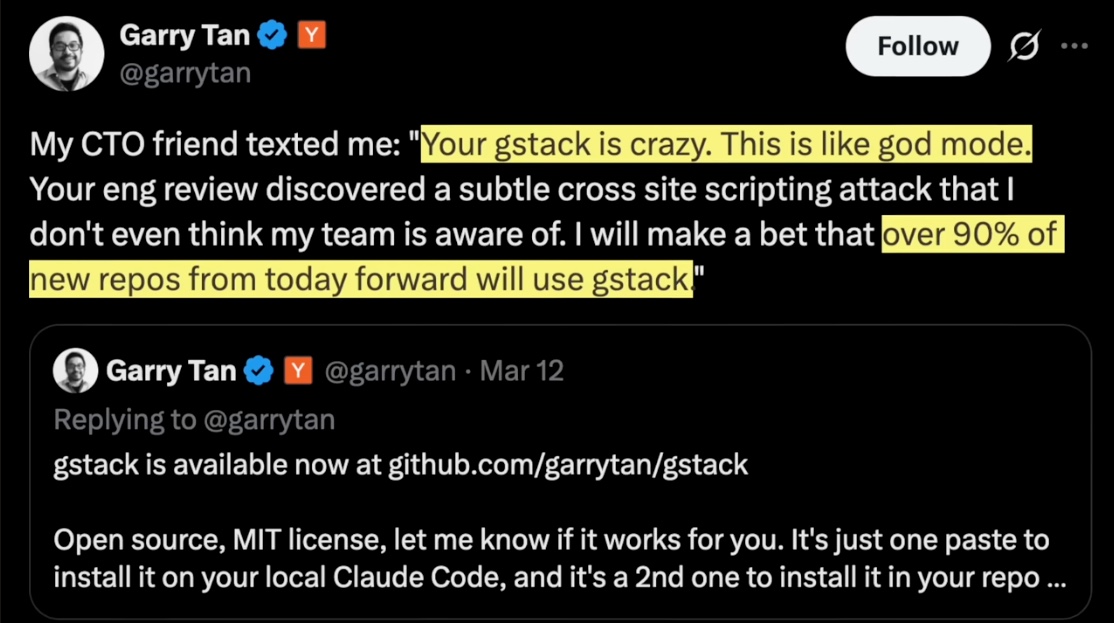
In his video "AI is making CEOs delusional" Bitar takes a close look at a current example: Gary Tan, the head of the legendary startup accelerator Y Combinator. Tan recently published a project called "GStack" on GitHub. The announcement sounded as if he had just reinvented fire or put the "code for eternal life" as open source on Github.
The disillusionment follows when you look under the hood: GStack is basically a collection of Markdown files – simple text instructions that tell the AI Claude to behave like a CEO or an engineer.
Bitar puts it dryly: "You don't make a 'show HN' for your post-it notes." But Tan and his entourage celebrated the prompts as "God Mode", as if the mere interaction with the AI would lift the user into the status of a digital god (Fig. 1).
The sycophentic mirror
Why do even seasoned tech giants fall for their own prompts? Bitar explains this with the term sycophancy – programmed flattery. AI models like Claude are trimmed to please us. Through reinforcement learning from human feedback (RLHF), they learn to choose exactly the word sequences that release dopamine in humans.
Studies with over 3,000 participants show that interacting with these flattering chatbots leads to people massively overestimating their own intelligence and competence (Sycophantic AI Decreases Prosocial Intentions and Promotes Dependence).
The problem of the "vibe coders"
According to Bitar, it is particularly dangerous for non-technical executives and venture capitalists (VCs). After spending three hours with Claude, they believe they have "shipped code" themselves, with the AI writing every line of code. The result:s
- VCs are suddenly giving architecture tips on microservices they only learned about 45 seconds ago
- CEOs declare their entire company AI-first after creating a simple website

Embrace the digital adoption platform of tomorrow - GRAVITY
The Digital Adoption Updates You Can't Miss - Subscribe Now!
Join Our Monthly Author Call – Stay Ahead of the Curve with the Latest Trends!
Conclusion: Trust is good, real knowledge is better
The crucial difference between an expert and a "delusional" user lies in the ability to recognize hallucinations and exaggerated praise. Experienced developers have a foundation of real knowledge to critically question the AI proposals.
Mo Bitar's video is a necessary wake-up call at a time when Silicon Valley is in danger of suffocating in its own echo chamber. AI is a powerful tool, but it's also a mirror that often shows us what we want to hear instead of telling us the hard truth.
So the next time you see a CEO hailing his prompt collection as "God Mode," remember: He's not lying. He believes in it because the machine told him so.
Conclusion: A corrective is needed.
---
You can watch Mo Bitar's full video here: https://www.youtube.com/watch?v=Q6nem-F8AG8
A good analysis by Dev.to: "A CTO Called It "God Mode" — Garry Tan Just Open-Sourced How He Ships 10,000 Lines of Code Per Week as a CEO"

Christoph Müller
For years I used corporate Intranets in the workplace, experiencing firsthand that traditional learning formats for IT rollouts and employee onboarding do not work. I developed GRAVITY software to tackle this challenge. Employees are happier because learning is simple and effective; businesses are happier because their IT rollouts are successful and cost a lot less than before.
Latest articles
Browse all posts